


The OPC Foundation announces the release of the first global OPC UA Machine Vision Part 1 Companion Specification whose development was hosted by the VDMA Machine Vision Initiative. The OPC Foundation is also proud to announce that this is the first OPC UA Companion Specification developed via close international collaboration between multinational Machine Vision related standards bodies including the American AIA, Chinese CMVU, European VDMA and EMVA, and Japanese JIIA.
The value of this internationally accepted OPC UA Machine Vision Part 1 Companion Specification is that it describes an abstraction of a generic vision system via a common digital representation (digital twin). This enables other systems to easily and seamlessly interact with any given physical vision system without having to deal with the challenges ‘custom’ information models and interfaces create.
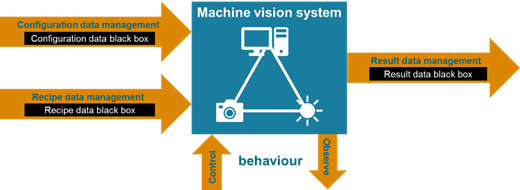
In addition, the value of the OPC UA companion specification being internationally accepted is that it enables 3rd Party systems from around the world to work seamlessly together across the shop floor and vertically throughout the enterprise.
This common OPC UA based model:
- helps make semantic interoperability possible
- provides end-users with maximum choice for finding best-fit components and solutions
- creates new opportunities for vendors looking to expand their markets.
A test implementation of the OPC UA companion specification was successfully completed and was presented to a large audience of automotive engineering experts at a major OPC UA automotive industry event in Germany. A hardware demonstrator is being developed and will be soon showcased at major trade shows in Germany.
Sharing his views on interoperability, Dr. Horst Heinol-Heikkinen, Managing Director of ASENTICS and board member of VDMA Machine Vision said: “Wouldn’t it be great, if machines could communicate in a direct way with each other? This idea is at the core of the Industry 4.0 movement to create the smart factory of the future. This goal of reaching “interoperability” is the new core competence that must distinguish our future products in a connected world of Industrial IoT – but even more, the acting people and organizations involved.” Dr. Horst concluded I am proud that Machine Vision plays a pioneering role and as one of the first VDMA divisions, is presenting the release of an OPC UA Companion Specification to the public, thanks to the extraordinary commitment and cooperation by the core working group members who worked very hard and made it possible.”
Stefan Hoppe, President and Executive Director of the OPC Foundation commented: “The OPC Foundation truly appreciate the results of the joint VDMA Machine Vision Initiative working group – Machine Vision has taken a decisive step forward into the Industrie4.0 era that is second to none.
Mr. Hoppe added, “Beyond the work done to adopt OPC UA as the interoperability platform for Machine Vision, we applaud the joint working group for embracing the spirit of inter-organizational collaboration on a global scale with G3. This ‘big thinking’ aligns well with a key OPC Foundation focus on encouraging organizations to work together to reduce the vast number of overlapping ‘custom’ information models into a harmonized set of OPC UA Companion Specifications which will benefit end-users and vendors around the world by lowering the barriers to true interoperability.”
The OPC Foundation encourages organizations to work together to reduce the vast number of overlapping ‘custom’ information models into a harmonized set of OPC UA Companion Specifications which will benefit end-users and vendors around the world by lowering the barriers to true interoperability.
About VDMA Machine Vision: The VDMA represents over 3,200 mainly small and medium size member companies in the engineering industry, making it one of the largest and most important industrial associations in Europe. As a part of the VDMA Robotics + Automation Association, VDMA Machine Vision unites more than 115 members: companies offering machine vision systems and components. The objective of this industry-driven platform is to support the machine vision sector through a wide spectrum of activities and services. Current activities include statistics and the annual VDMA Machine Vision Market Survey, marketing services, public relations, trade fair policy, future radar, networking events and conferences.
Find out more about VDMA Machine Vision at: www.vdma.com/vision.
About the OPC Foundation: Since 1996, the OPC Foundation has facilitated the development and adoption of the OPC information exchange standards. As both advocate and custodian of these specifications, the Foundation’s mission is to help industry vendors, end-users, and software developers maintain interoperability in their manufacturing and automation assets. The OPC Foundation is dedicated to providing the best specifications, technology, process and certification to achieve multivendor, multiplatform, secure, reliable interoperability for moving data and information from the embedded world to the enterprise cloud. The Foundation serves over 700 members worldwide in the Industrial Automation, IT, IoT, IIoT, M2M, Industrie 4.0, Building Automation, machine tools, pharmaceutical, petrochemical, and Smart Energy sectors.
For more information about the OPC Foundation, please visit https://opcfoundation.org.
More Information:
You can download the specification from any of the links below:
https://ibv.vdma.org/en/viewer/-/v2article/render/37795049









![[칼럼] IT/OT 융합 환경의 사이버 복원력 확보를 위한 OT 보안 아키텍처 및 AI 위협 탐지 기술 분석](https://icnweb.kr/wp-content/uploads/2023/02/rockwell-automation-mobileAna_900.jpg "[칼럼] IT/OT 융합 환경의 사이버 복원력 확보를 위한 OT 보안 아키텍처 및 AI 위협 탐지 기술 분석")








![[이슈] 스마트 공장 통신 표준 완성… IEC/IEEE 60802 TSN 통합 표준 발표](https://icnweb.kr/wp-content/uploads/2026/09/TSN_60802_standard_AI-900web.jpg "[이슈] 스마트 공장 통신 표준 완성… IEC/IEEE 60802 TSN 통합 표준 발표")