


The World Economic Forum welcomes 22 new members of the Global Lighthouse Network, a community of 172 industry leaders pioneering the use of cutting-edge Fourth Industrial Revolution technologies in manufacturing.
The World Economic Forum announced that 22 innovative manufacturers have joined the Global Lighthouse Network, expanding the community to 172 leading production facilities and value chains that harness digital technologies at scale to drive next-generation operational excellence, environmental sustainability and workforce development.
Amid global supply chain disruptions, technological advances and growing environmental pressures, sustainable transformation of global production has become critical to fuel much-needed productivity gains. The growing Global Lighthouse Network and its diverse members demonstrate how to harness artificial intelligence (AI) and other advanced technologies in tackling these challenges where others have struggled to do so, future-proofing the industry by enhancing agility, resilience and environmental responsibility.
The latest cohort of 19 Fourth Industrial Revolution and three Sustainability Lighthouses spans 10 countries: China, the Czech Republic, Germany, India, Mexico, Singapore, Sweden and Türkiye, and newcomers Switzerland and Viet Nam. This diverse group is united by their shared commitment to innovative Fourth Industrial Revolution (4IR) technologies and will leverage the Global Lighthouse Network as a platform for exchanging best practices across industries.
“Lighthouses are breaking through the AI hype, and raising the bar for digital transformations,” said Kiva Allgood, Head of the Centre for Advanced Manufacturing and Supply Chains, World Economic Forum. “These sites are weaving advanced technologies into their operations, not just to enhance productivity, but to create a sustainable and inclusive future for their workforce and the broader community.”
Despite the hype around artificial intelligence (AI), its tangible impact often falls short of expectations. However, the latest Global Lighthouse Network cohort is defying this narrative, using AI to achieve step-change impact. They are also revolutionizing traditional operations, making roles more engaging and collaborative through advanced technology applications.
“Artificial intelligence is playing an increasingly vital role in the Industry 4.0 revolution, emerging as a key driving force in reshaping the global manufacturing industry,” said Brand Cheng, Chairman and Chief Executive Officer, Foxconn Industrial Internet.
Generative AI (GenAI) and machine learning (ML) models are at the forefront of this revolution. Despite the challenges – such as rising competition, resource scarcity and operational complexity – Lighthouses are pioneering the scaling of advanced technologies, unlocking new workforce potential. Recognizing the importance of human capital in the success of tech-enabled transformations, these sites are deploying industry-leading programmes to improve worker development, mobility and engagement.
The latest cohort of Lighthouses has observed an average 50% boost in labour productivity, attributed to various digital solutions such as interactive training programmes, smart devices and wearables, and automated systems that combine robotics, AI and machine vision. Process modelling and root-cause analytics have also unlocked efficiency gains across Lighthouses’ end-to-end supply chains, on average reducing energy consumption by 22%, inventory by 27%, and scrap or waste by 55%.
“These new Lighthouses prove that AI and other 4IR technologies not only drive business value, but also enhance sustainability and workforce engagement,” said Enno de Boer, Global Head of Operations Technology at McKinsey & Company. “At a time when many organizations are seeking solutions for performance, environmental and frontline challenges while struggling to capture the full potential of AI, this latest cohort is lighting the way. They are pioneering the integration of advanced technologies to achieve comprehensive objectives, from operational efficiency to environmental stewardship.”
Sustainability Lighthouses
This year, three Lighthouses have been awarded the additional designation of Sustainability Lighthouses for their industry-leading reductions in Scope 1, 2 and 3 emissions, and their advancements in promoting a circular economy. Championing sustainability as a business imperative, these global leaders reaffirm the Network’s role as the standard for operational excellence across the world. The three Sustainability Lighthouses are:
1. Foxconn Industrial Internet (Shenzhen, People’s Republic of China): To meet the consumer electronics industry’s commitment to carbon neutrality, Foxconn Industrial Internet utilized AI, Internet of Things (IoT) and other 4IR technologies to optimize recycling, track carbon footprints and innovate for sustainability. This led to a 42% reduction in Scope 3 emissions, a 24% cut in Scope 1 and 2 emissions, and increased recycled material content to 55%-75%.
2. Hefei Midea Washing Machine Co., Ltd. (Hefei, People’s Republic of China): As a top global washing machine producer and sustainability leader, Midea Hefei implemented 24 4IR use cases to reduce emissions and optimize energy use. The site cut Scope 1 and 2 emissions by 36.4% and Scope 3 emissions by 26.0%. Solar power now provides 31% of energy, 40% of water is recycled, and waste was reduced by 22.1%.
3. Qingdao Factory, Tsingtao Brewery Co., Ltd. (Qingdao, People’s Republic of China): Industrial beer brewing is traditionally high-energy and carbon-intensive. Tsingtao Brewery leveraged advanced algorithms and IoT to deploy 25 use cases aimed at reducing energy and carbon intensity in beer production. The factory achieved a 25% reduction in unit energy consumption, a 57% decrease in Scope 1 and 2 emissions, and a 13% cut in Scope 3 emissions.
Factory Lighthouses
The latest cohort of Factory Lighthouses provides a blueprint for accelerated deployment of AI solutions that bolster productivity, enhance problem-solving capabilities and foster innovation. The new Factory Lighthouses are:
1. AstraZeneca (Södertälje, Sweden): To boost capacity and accelerate product launches, AstraZeneca Södertälje implemented 50+ 4IR solutions, including machine learning and optimization algorithms. These efforts, coupled with the upskilling of 3,000 employees, resulted in a 56% increase in labour productivity and a 67% reduction in development lead times for new products.
2. AstraZeneca Pharmaceutical Co., Ltd. (Wuxi, People’s Republic of China): Responding to domestic price cuts and increased demand volatility, AstraZeneca Wuxi deployed 34 4IR use cases, including AI and algorithms, to enhance manufacturing synchronization and efficiency. The site achieved a 55% increase in output, a 44% reduction in manufacturing lead time, an 80% reduction in non-perfect batches and a 54% improvement in labour productivity.
3. Beko Dishwasher Plant (Ankara, Türkiye): To meet the rising demand for high-quality dishwashers, Beko Dishwasher Plant underwent a 4IR transformation by integrating 35+ in-house solutions with its IoT platform, FLOW. This led to a 46% reduction in time-to-market, a 29.2% drop in field failure rates, and a 26.1% decrease in conversion costs. Additionally, over 1,000 employees were upskilled in 4IR technologies.
4. Coca-Cola Singapore (Tuas Bay, Singapore): Confronted with rising volume and product portfolio complexity, the site implemented ML-powered demand forecasting, robotics and advanced scheduling algorithms. This led to a 28% throughput increase, a 70% boost in labour productivity, an 80% reduction in shortages, and a 31% improvement in on-time deliveries while cutting Scope 2 emissions by 34%.
5. Continental Automotive Czechia, s.r.o. (Brandys nad Labem, Czechia): Continental Automotive’s largest electronics plant in Brandys reimagined its processes to meet demand and shifting consumer preferences. By implementing over 30 digital solutions, the plant achieved a 35% efficiency boost, 15% better space utilization, and a 10% reduction in field incidents, all while enhancing employee satisfaction and setting new standards in high-tech production for its upcoming “Digital Mega Factory.”
6. F. Hoffmann-La Roche Ltd (Basel, Switzerland): Roche’s Basel Drug Substance site, a key player in the company’s goal to launch 20 new transformative medicines by 2030, produces a wide range of treatments, including chemically synthesized small molecules. To enhance efficiency, the site deployed digital and AI solutions that cut yield variability by 60%, halved technology transfer time, and reduced Scope 1 and 2 emissions by 31%, reinforcing its critical role in Roche’s global network.
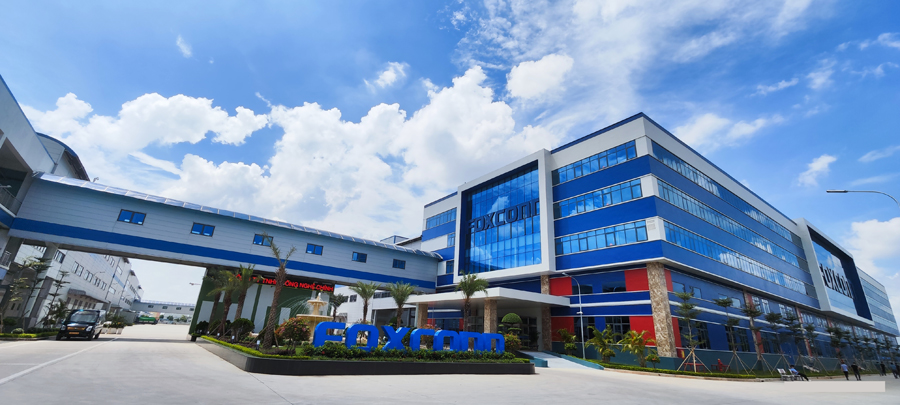
7. Foxconn Industrial Internet (Bắc Giang, Viet Nam): In its global expansion for supply chain resilience, Foxconn Industrial Internet Viet Nam overcame initial challenges such as heavy reliance on imported materials and the opportunity to develop local talent. By implementing 40+ 4IR use cases, including advanced planning and AI-driven automation, the site improved labour productivity by 190%, achieved 99.5% on-time delivery and cut manufacturing costs by 45%.
8. GE HealthCare Beijing Site (Beijing, People’s Republic of China): Serving 160 countries, GE HealthCare Beijing tackled complex manufacturing and quality demands by implementing 45 digital solutions across 26 production lines. By deploying AI for defect detection and deep learning, the site reduced cycle times by 66%, slashed scrap by 66% and lowered customer complaints by 73%.
9. Jubilant Ingrevia Limited (Bharuch, India): Jubilant Ingrevia deployed 4IR technologies in global brownfield specialty chemical manufacturing and reskilling over 2000 employees. Through 30+ integrated use cases leveraging artificial and machine learning, IoT-based digital twin and predictive platforms, Jubilant Ingrevia’s site reduced the overall process variability by 60% and almost doubled production volume.
10. Mengniu Dairy (Ningxia) Co. LTD (Ningxia, People’s Republic of China): To meet rising consumer demand for fresher, more nutritious dairy products, Mengniu Dairy’s Ningxia factory implemented over 30 advanced 4IR use cases, from intelligent decision-making to flexible automation. These initiatives, covering milk processing, packaging and testing, led to a 55% reduction in delivery lead time, a 60% decrease in quality defects and a 32% reduction in operational costs, significantly enhancing both efficiency and product quality.
11. Qingdao Hisensehitachi Air-conditioning Systems Co., Ltd. (Qingdao, People’s Republic of China): To meet global market demands, Hisensehitachi’s Qingdao site implemented 40+ 4IR use cases, boosting product development speed by 37%, increasing labour productivity by 49% and reducing manufacturing costs by 35%.
12. Sanmen Nuclear Power Co., Ltd. (Sanmen County, People’s Republic of China): Committed to zero accidents, Sanmen Nuclear Power deployed 40+ 4IR cases, including AI and robotics, to improve operational safety. These efforts maintained a 0% safety accident rate, increased capacity factor by 1.5%, and cut major overhaul periods by 46% while improving labour productivity by 18%.
13. SANY RENEWABLE ENERGY Co. (Shaoshan, People’s Republic of China): Facing various challenges in producing and transporting large wind turbine blades, SANY deployed 29 4IR use cases, including AI and intelligent automation. This resulted in a 20% reduction in defects, a 33% boost in productivity and a 34% cut in delivery time, demonstrating digital technology’s transformative impact on clean energy.
14. Schneider Electric (Monterrey, Mexico): To meet the growing demand for complex products, Schneider Electric’s Monterrey facility integrated digital technologies such as ML-driven forecasting and autonomous robots. These enhancements led to sustained annual growth, a 20% reduction in defects and a 30% reduction in water consumption.
15. Siemens AG – Electronics Factory Erlangen (Erlangen, Germany): Siemens Erlangen developed its Green Lean Digital strategy to lead in mid-volume, high-mix manufacturing. With over 100 AI algorithms and extensive use of digital twins, powered by a flexible and modular IT architecture, the site improved labour productivity by 69%, cut time to market by 40% and reduced energy usage by 42%.
16. Taiyuan Heavy Industry Railway Transit Equipment Co., Ltd. (TZ) (Taiyuan, People’s Republic of China): To meet stringent safety and quality standards for high-speed railways, TZ implemented 40+ 4IR use cases enhancing quality and productivity through the use of AI and flexible automation. These advances led to a 33% reduction in defect rates, a 29% decrease in unit costs and a 33% increase in throughput.
17. Zhengzhou Coal Mining Machinery (Group) Co., Ltd. (Zhengzhou, People’s Republic of China): To meet the demand for fully customized hydraulic supports and faster delivery, Zhengzhou Coal Mining implemented 48 4IR use cases, including IoT, machine learning and adaptive automation. These innovations transformed the site into a smart factory capable of high-flexibility, high-efficiency production, cutting lead times by 66%, boosting output per worker by 205% and reducing defect rates by 73%.
End-to-End (E2E) Value Chain Lighthouses
The latest cohort of E2E Lighthouses have responded to surging demand with advanced technologies that not only provide enhanced visibility, but also help to streamline complex processes and improve design and planning efficiency. The new E2E Lighthouses are:
1. Qingdao Haier (Jiaozhou) Air Conditioner Co., Ltd. (Qingdao, People’s Republic of China): To meet surging global demand and address delays in R&D, delivery and after-sales service, Haier Jiaozhou optimized its entire value chain with big data, advanced algorithms and generative AI. Supplying 90% of its products globally, the site achieved a 49% reduction in design cycle time, a 19% decrease in order delivery time, and a 28% drop in overseas failure rates.
2. Schneider Electric (Shanghai, People’s Republic of China): Faced with a surge in global orders and a fourfold increase in SKUs from new energy markets, Schneider Electric Shanghai responded by boosting automation by 20% and integrating advanced technologies like ML-enabled prototyping, smart planning and GenAI-driven maintenance. These efforts led to a 63% improvement in speed-to-market, a 67% reduction in make-to-order lead time and an 82% increase in labour productivity.
About the Global Lighthouse Network
Launched in 2018, the Global Lighthouse Network (GLN) brings together and celebrates the success of the world’s foremost production networks making a positive, measurable impact on performance and sustainability, enabled by technology. This global community of influential innovators, deploying over 1,000 solutions across multiple industries, includes 172 sites, 20 of which are Sustainability Lighthouses. The Network now spans 31 countries and 35 different sectors.
By leveraging such innovations as artificial intelligence, 3D printing and big data analytics, Lighthouses drive efficiency, competitiveness and transformative business models at scale, fostering economic growth while championing workforce augmentation and environmental protection and providing a collaborative learning journey for all-sized manufacturers globally.
The Global Lighthouse Network is a World Economic Forum initiative. The initiative was co-founded with McKinsey & Company and is counseled by an advisory board of industry leaders who are working together to shape the future of global manufacturing. The Advisory Board includes Contemporary Amperex Technology (CATL), Foxconn Industrial Internet, Henkel, Johnson & Johnson, Koç Holding, McKinsey & Company, Schneider Electric and Siemens. Advanced industrial sites that join the network are designated by an independent panel of experts.








![[칼럼] IT/OT 융합 환경의 사이버 복원력 확보를 위한 OT 보안 아키텍처 및 AI 위협 탐지 기술 분석](https://icnweb.kr/wp-content/uploads/2023/02/rockwell-automation-mobileAna_900.jpg "[칼럼] IT/OT 융합 환경의 사이버 복원력 확보를 위한 OT 보안 아키텍처 및 AI 위협 탐지 기술 분석")







![[이슈] 스마트 공장 통신 표준 완성… IEC/IEEE 60802 TSN 통합 표준 발표](https://icnweb.kr/wp-content/uploads/2026/09/TSN_60802_standard_AI-900web.jpg "[이슈] 스마트 공장 통신 표준 완성… IEC/IEEE 60802 TSN 통합 표준 발표")