


WISeKey International, announced that its cybersecurity offering (hardware and software platform) for connected cars addresses safety and security issues arising from system vulnerabilities.
WISeKey’s entry to the connected cars security segment stated last year when Daimler AG started to use the technology to validate the authenticity of different vehicle components, protect onboard communication between vehicle components and provide over-the-air software updates.
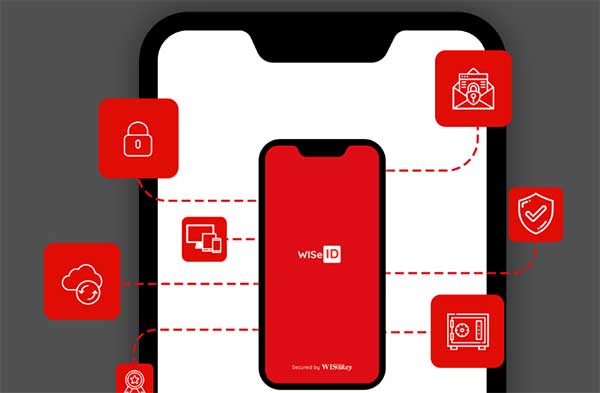
Additionally, ISTANA PKI’s authentication certificates are used by employees, dealers and suppliers to access car components to diagnose mechanical/technical issues and update software, from any location. The ISTANA PKI platform also allows users to securely interact with a car’s smart features using smartphones and other devices.
Currently, WISeKey is working with several smart car manufacturers and its ISTANA PKI platform is already active in several large-scale projects. A recent example is a strategic contract signed with a leading European automobile manufacturer, cementing its role in the connected cars sector. The agreement includes the integration of WISeKey IoT and PKI with the manufacturer’s connected car solutions allowing them to authenticate legitimate car components and enable owners to securely interact with the car’s smart features.
“As the connected car industry continue to evolve, essentially becoming software on a metal shield, they are vulnerable to the very same threats and attacks as home computers, laptops and smartphones. Unless appropriate cybersecurity measures are implemented, hackers can remotely access the vehicle’s computer system, manipulate the brakes, engine, and transmission. Our tamperproof chips and embedded software are designed to prevent and protect connected cars against hacking,” said Carlos Moreira, CEO of WISeKey.
Connected cars are distinct from basic models primarily due to their ability to access to the Internet via their communication system. It allows the driver to connect their smartphone to the car, but also the car itself to connect to surrounding cars and infrastructures. Passengers can, therefore, benefit from extended services, particularly through apps. Those connected cars consist of 6 essential points:
Mobility management (travel assistance, traffic information)
Vehicle management (real-time vehicle status information)
Safety (prediction of dangerous situation)
Driver assistance (cruise control on the highway, assistance to park)
Entertainment (games, music, social networks, internet)
Well-being (detection of fatigue, medical assistance)
Virtually all new cars on the market today include electronic technologies that could be vulnerable to hacking or privacy intrusions if data security is not addressed. Embedded WISeKey hardware security in the car protects the “identity” of each device, prevents unauthorized tampering, and protects the privacy and security of the vast amount of data these devices generate. BI Intelligence expects 94 million connected cars to be sold in 2021 (with 82% to be connected cars), representing a compound annual growth rate of 35% from 21 million connected cars sold in 2016.
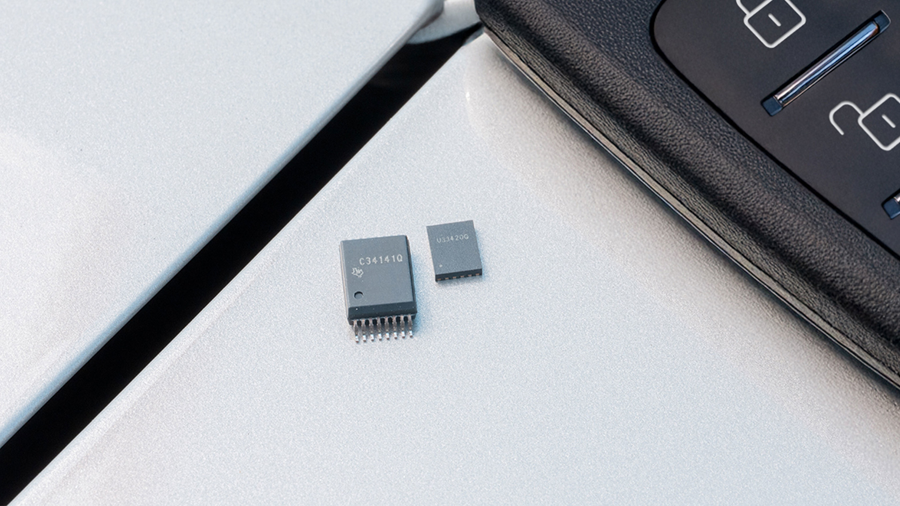
A fundamental principle behind the security of WISeKey Semiconductors is that its chips not only control how devices perform under normal conditions, but also control how these devices react when attacked or tampered with in any way, including self-destruction. WISeKey Semiconductor chips are designed to authenticate individual car components within the vehicle itself, ensure that only legitimate software is installed in the car, authenticate users, make certain that only legitimate users have access to the connected car functions, and encrypt data to make it tamperproof and private.





![[전문가기고] K-배터리 3사, ‘Beyond EV’ 시장을 향한 기술 초격차 전략 비교 [인터배터리 2026]](https://icnweb.kr/wp-content/uploads/2026/03/battery-P3-beyond-Battery-web-1024x576.png "[전문가기고] K-배터리 3사, ‘Beyond EV’ 시장을 향한 기술 초격차 전략 비교 [인터배터리 2026]")
![[심층기획] 피지컬 AI의 심장 ‘이차전지’, 휴머노이드 로봇 혁명 이끈다 [인터배터리 2026]](https://icnweb.kr/wp-content/uploads/2026/03/Battery-pack-interB-Phy-AI.png "[심층기획] 피지컬 AI의 심장 ‘이차전지’, 휴머노이드 로봇 혁명 이끈다 [인터배터리 2026]")
![[데스크칼럼] 삼성 2030 AI 자율 공장 로드맵: 자동화를 넘어 ‘자율 제조’의 시대로](https://icnweb.kr/wp-content/uploads/2026/03/Gemini_Generated_Image_2030-AI-factory-1024web.jpg "[데스크칼럼] 삼성 2030 AI 자율 공장 로드맵: 자동화를 넘어 ‘자율 제조’의 시대로")




![[칼럼] 제조업 생존 가르는 EU CRA와 피지컬 AI 보안 전략](https://icnweb.kr/wp-content/uploads/2026/03/CRA-2026-notebookLM-20260326-1024web.png "[칼럼] 제조업 생존 가르는 EU CRA와 피지컬 AI 보안 전략")
![한국요꼬가와전기, 인터배터리 2026서 ‘배터리 자율 제조’ 비전 제시 [인터배터리 2026]](https://icnweb.kr/wp-content/uploads/2026/03/20260311_1604006789830108724224474-1024x576.jpg "한국요꼬가와전기, 인터배터리 2026서 ‘배터리 자율 제조’ 비전 제시 [인터배터리 2026]")
![[공지] 프로피버스/프로피넷 센터 코리아, 2026년 제1회 기술교육 개최… PROFINET 실습 및 심화 과정 강화](https://icnweb.kr/wp-content/uploads/2026/03/PROFINET-band.png "[공지] 프로피버스/프로피넷 센터 코리아, 2026년 제1회 기술교육 개최… PROFINET 실습 및 심화 과정 강화")